When you click the link, it will take you to the corresponding page.
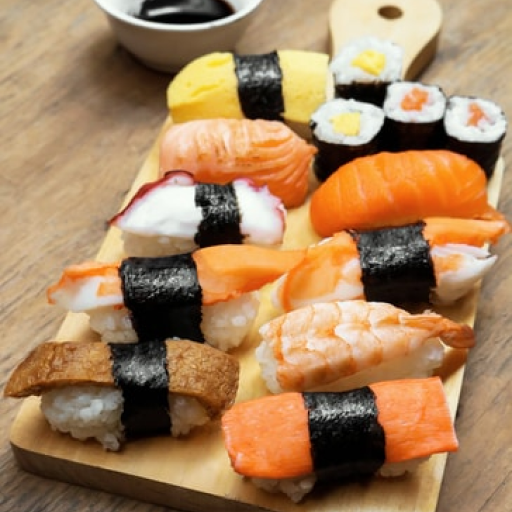
刺身盛り合わせ(3種×2貫)
刺身盛り合わせ(6種×1貫)
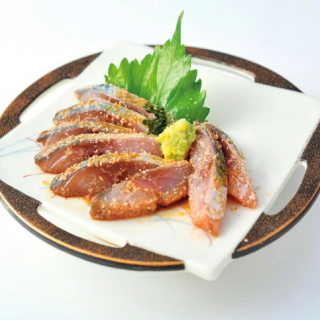
博多ゴマサバ
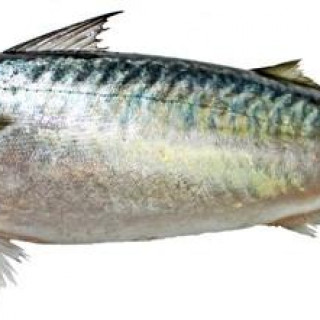
鯖の刺身
Rrepresentative of blue-backed fish
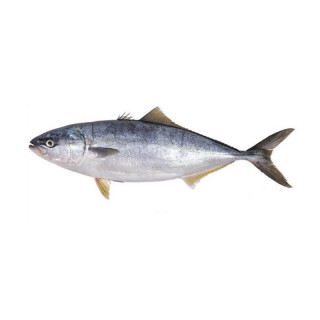
ブリ刺
Buri (鰤), which belongs to the genus of yellowtail, is a representative winter fish. It is a complex character used in Chinese characters. It is a blue fish with red flesh widely used as a key ingredient in sushi. Along with Bushiri and Kanpachi which are also members of the yellowtail family, they are known as the three brothers of yellowtail. During winter, large yellowtail measuring over 1 meter in size and with high oil, content are considered premium and referred to as Kanburi (寒ブリ). They are not as popular during the summer. On the other hand, Bushiri is in season during the summer. Yellowtail is also considered a rising star in the fish market. In Kanto, the young yellowtail is called Inada, while in Kansai, it is called Hamachi. However, the yellowtail raised in Kansai is shipped to Kanto under the name Hamachi, so in Kanto, farmed yellowtail is referred to as Hamachi.
タイ刺
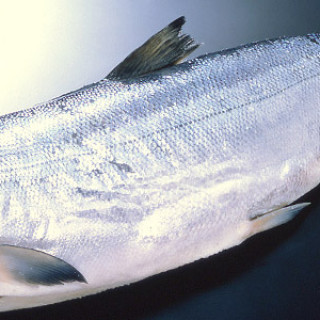
サーモン刺身
タコぶつ
生本マグロ刺
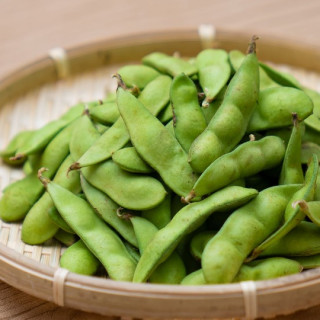
枝豆
Edamame
おきうと
冷奴
ポテサラ
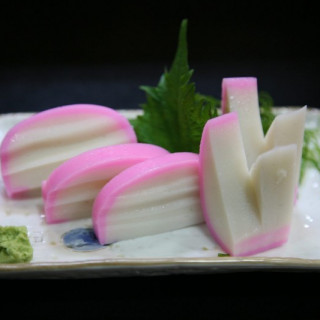
板わさ
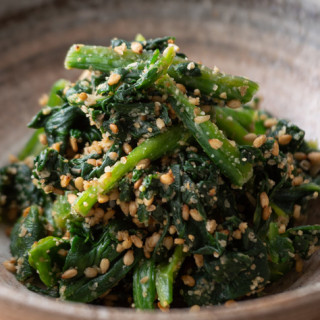
糸島鶏胡麻和え
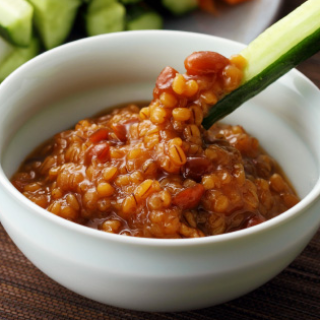
もろきゅう
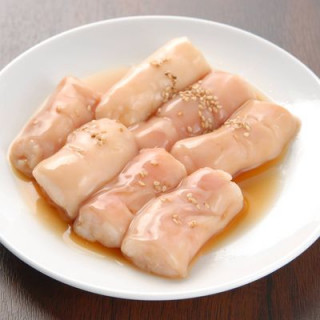
博多酢もつ
Offal. Such as the innards of cows, pigs, chickens, etc.
辛子蓮根
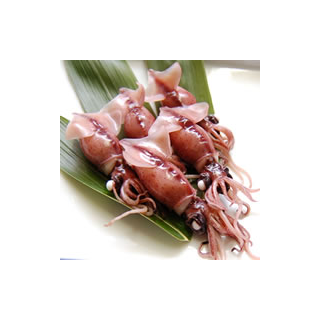
ホタルイカ沖漬け
Squid that emits light from its body
明太子
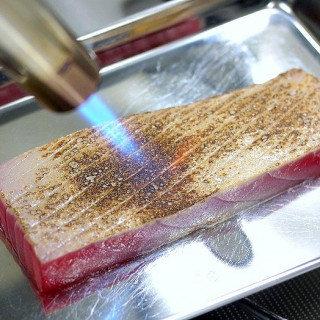
炙り明太子
"Aburi" is a noun derived from the verb "Aburu" (炙る) in Japanese, which means to lightly sear or grill the surface of ingredients using direct flame. Unlike general grilling methods that evenly cook the entire ingredient, Aburi involves searing only the surface while leaving the inside uncooked. It is a cooking technique that allows for a contrast in texture and a smoky flavor between the outer and inner parts of the ingredients. Aburi sushi (炙り寿司), where the surface of fatty fish such as salmon or tuna is seared, is a representative example of Aburi cuisine. Even mild white-fleshed fish like sea bream can be enhanced in flavor and texture by searing the skin.
いか明太